
Pig Keeping

Featured in Lifestyle block Nz
Words by Mieke and Simon Couling
read time : 5 min
part one
Pigs are incredibly intelligent, social, clean (yes, very clean!) and useful animals that can really enhance the pleasure of living on a block.
We started keeping pigs the moment we had access to a lifestyle block six years ago.
To this day, we still adore and admire our pigs. We are very passionate about anything and everything to do with pigs, even the end of their lives.
Pigs have been domesticated since ancient times. Archaeological evidence suggests that pigs have been managed for as long as 13,000 years. The domestic pig (Sus scrofa domesticus) was domesticated somewhere between 5000-7000 years ago. Although they were not the highest valued of domestic animals, they were predominantly kept for their meat and they have been part of the small farm for a long time. Nowadays schools tend to put scraps
into worm farms or compost heaps, but it wasn’t unusual in the old days for them to have a pig bucket.
We moved from the Hawkes Bay to the Coromandel with two vehicles, three children, two dogs, a cat, two pigs and a rooster. We must have made quite a sight
travelling with our menagerie. The pigs we had were just the standard breed (or more accurately non-breed) of white pigs. As our knowledge about pig-keeping grew so did our awareness of rare breeds, and the importance of ensuring these breeds will still be around for future generations.
John Earney from the Rare Breeds Conservation Society and Avonstour Heritage Farm once said “the best way to save a rare breed is to eat it”. We took this advice to heart and happily became Berkshire breeders. We mostly sell young, weaned Berkshires to keen lifestyle blockers wanting to grow their own meat, as well as to other Berkshire breeders.
History

The Berkshire is an amazing pig. It is an historically significant breed and listed a high priority by the Rare Breed Conservation Society.
Berkshires are a black pig with six white points (nose, tail and legs). The origins of the Berkshire are a bit vague but legend suggests that around 1640 the pig was discovered by Oliver Cromwell’s army in the county seat of the shire of Berks in England. Supposedly, it soon became a favorite with the English royal family (for its divine taste no doubt) and all current Berkshires are said to be descendants of the herd maintained by the monarchy.
The Berkshire was first introduced to New Zealand during the early days of European settlement.
Attributes
The Berkshire is a hardy pig, and the sows have a docile and lovely disposition. The boars have superior semen quality and a respectable libido. They are easy to handle and friendly chaps. The litter sizes (usually 7-14) are sometimes criticised for being small, but when one takes into account the quality of the meat and the excellent mothering skills shown by most Berkshire sows this argument loses merit.
The Berkshire can require slightly more food than commercial crossbred pigs as they are, on average, about 5-10% poorer in food efficiency then their commercial cousins.
One of the biggest drawbacks of growing Berkshires for meat is their black hair, but this can be dealt with using a good de-hairing process. Overall the quality of the meat, the hardiness and the wonderful nature of the Berkshire pigs outweighs the slight disadvantages.
Care
Maintaining the health of pigs is not very difficult if you approach the whole process with the pig’s best interests at heart. The first two or three weeks of a piglet’s life are known to be critical, but our experience would suggest that if they make it past the first three days they stand a good chance for a long and healthy life. Healthy pigs are alert and active, with a tight curly tail and sleek hair coats. Pigs love food and will do anything for food so a poor appetite is always a sign of an unhealthy pig.
Stress is one of the biggest problems for pigs. Being the intelligent creatures that they are, stress impacts on them badly. A new environment, vaccinations, isolation, boredom, strange surrounding or new pigs can all serve to stress or scare a pig, and care must be taken in any of these situations. A stressed pig is more prone to sickness and disease.

What can you do to keep a pig healthy and happy? Feed and shelter would be the two easiest steps in ensuring your pigs are well cared for. Pigs are extremely sensitive to heat and can suffer from sunburn and heatstroke, or from the cold. Pigs love to wallow in a mud bath in the hot summer months to help keep them cool, and it’s also a method they use to control parasites. In the winter months a pig hut (preferably with a raised floor) lined with straw should keep them cosy and warm. Pigs will not urinate or defecate in their sleeping huts, so any straw provided will last some time.

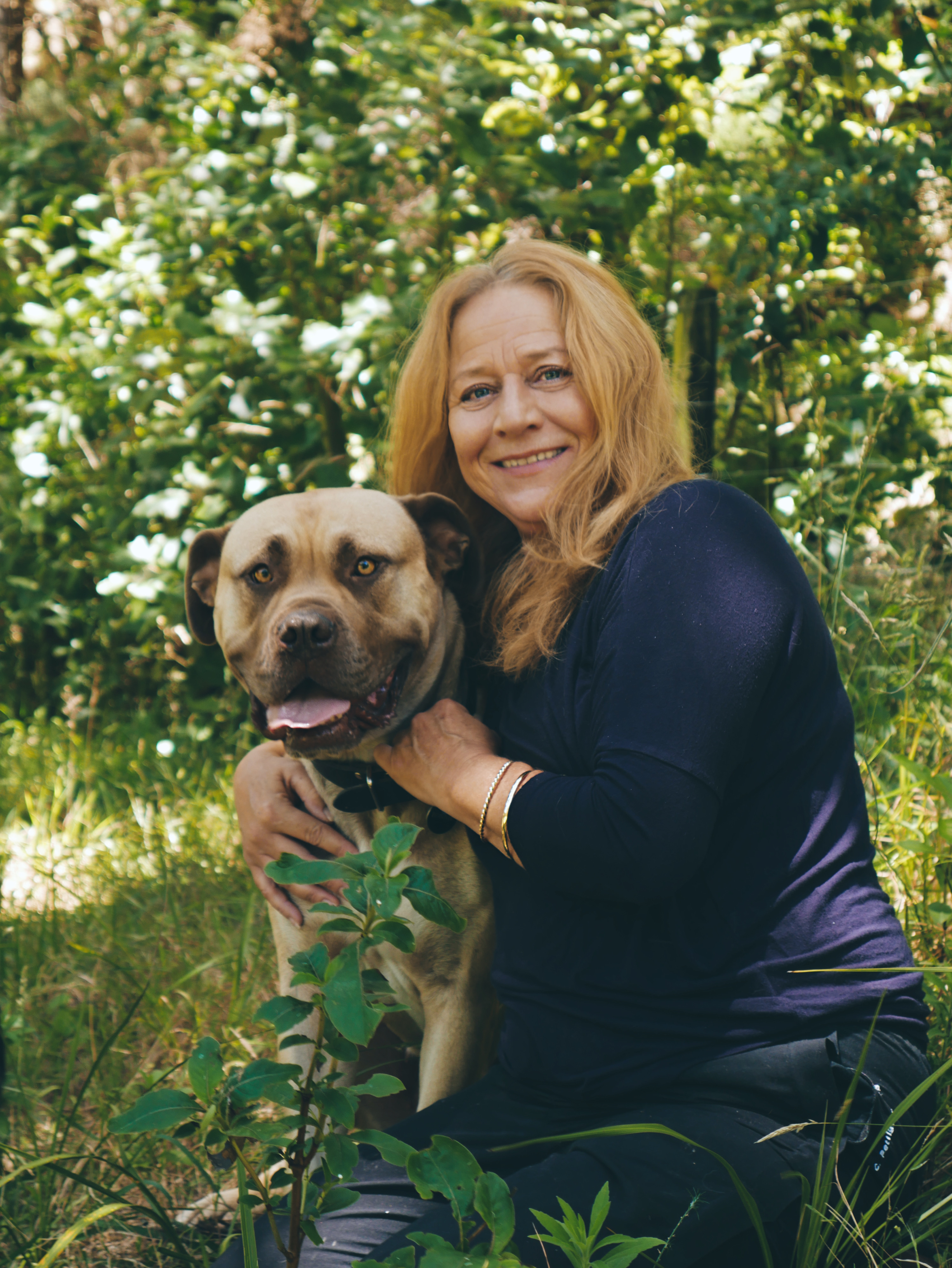
Mieke and Simon Couling with their beloved Berkshires. Their pigs live happily in a free-range paddock, and are very much part of the family, even though
some are killed and processed each year for their delicious and beautifully marbled meat.
How to add even more value
You can put additives into your silage when packaging it. Molasses will increase the sugar content, kick starting the whole fermentation process, or you can purchase inoculants which are the lactic acid bacteria itself. You can also add acids like formic and sulphuric acid (be careful with these - they can also cause harm) to immediately lower the pH. Next year, whenever my dry matter is over 30% (which it was on some of our hot, dry days) I will experiment with spraying on diluted molasses or cider vinegar.
Mieke’s perfect hairless pig tip
We use the hot-bath method. A critical component of success with this is that the water temperature is exactly 63oC. After bathing the pig’s carcase, swift work with a good scraper gets the hair off easily and cleanly. It is not unheard of that any left-over hairs are simply shaved off with a razor!
Feed
Pig are non-ruminant animals (they have a single stomach) who adore food. We would go as far as to say that they will do anything, and sacrifice anything, for food!
Farm grains are the best source of energy for pigs. Corn is an excellent contribution to pig feed as it is high in digestible carbohydrates. On its own it is not enough and needs to be supplemented with protein. Milk products are great and popular with the pigs. Aside from free ranging our pigs, we also feed sugar beet and pig nuggets as supplements. Clean, fresh water is also important. One half to two-thirds of a pig’s body is made of water and unlimited access to clean drinking water is an absolute must. When checking the water troughs ask if you would be happy to drink from it. If not, it is time for a clean out.

Playing
Pigs are playful creatures. Observe some young piglets and you will notice a lot of the time is spent in play, running circles around each other, grunting and barking
with delight. Pigs enjoy toys such as plastic buckets, cardboard boxes or a feed sack but their interest doesn’t last long and they will
tire of a toy that is left with them too long. Next to food, our pigs love a good scratch. We have a very large boar who will happily lie down for our children as long as it means a tummy scratch! The children have also taught him to sit for treats. Pigs will rub up against fences
and posts for a good scratch, so it is worthwhile making sure you have a very sturdy scratching post or two.
Rooting
Many people ring their pigs for fear of having their entire property rooted up. Pigs do love to root, but the amount of damage done is manageable. Pigs will root lightly as part of their daily scavenging around for food, but given enough space and freedom the effect of any of such light rooting, or scuffing, is minimal. The rooting becomes a problem if pigs are confined to a small space, are hungry or bored.
You can use this knowledge to your advantage too. It is very satisfying to get your pigs to plough the land in preparation for planting crops. They root up the soil, composting as they go along. Fence an area using hot wires and spread kibbled maize across the area you want ploughed. It is all about input, output and respecting the pig’s natural ways of being - it’s a win-win situation.
We adore our pigs and they seem to accept us as part of their herd. It is interesting to note their reaction to strangers on the property (let’s just say we wouldn’t recommend going into the paddock with them). They trust us implicitly, even though at times we cull one or two from the herd, and they guard the property well. They are intelligent, clean and delightful creatures, akin to primates, dolphins and whales in intelligence.
They are also the best escape artists we have ever known (much to the dismay of our farming neighbours). They provide us with pleasure, entertainment, and meat for the table.
Pigs are really chatty too. It is delightful to hear the snorts and grunts as they communicate with each other. The mums have specific sounds for gathering the troops if they get too spread out. The pigs also have distinctive ways of communicating with us.
We could not imagine a lifestyle block without pigs.
The best way to save a rare breed is to eat it, they provide us with pleasure, entertainment as well as meat for the table
Next month: when pigs are ready to eat

Comments